
Successful case of injection molding for plastic molds for consumer electronics
Through mold optimization, process stabilization, and a strict quality control system, the consumer electronics precision plastic structural parts project successfully achieved rapid implementation from new product prototyping to mass production. The product dimensional accuracy, appearance quality, assembly performance, and batch stability all met customer requirements, effectively supporting the timely release and market delivery of the customer's new products
Project Details
Project Background
When a well-known consumer electronics company launched a new generation of intelligent terminal products, it required a high-precision plastic structural component. The product was required to have a thin and light appearance, a complex buckle structure, stable assembly performance, and the ability to deliver in large quantities. Due to the compact internal space of the product, the requirements for dimensional accuracy, surface quality, and assembly consistency of the components were high. The customer needed a professional mold supplier with mold design, precision manufacturing, injection molding, and full-process quality control capabilities to ensure that the product could quickly transition from the research and development stage to stable mass production.
Project Challenge
High structural precision requirements: The product includes multiple small buckles, precise hole positions, and ultra-thin wall structures, which impose high requirements on mold processing precision, injection molding stability, and assembly tolerance control.
Both appearance and performance are crucial. The appearance of the parts must meet the high standards of consumer electronics, with no visible shrinkage, burrs, deformation, or color variation on the surface. At the same time, they must also satisfy the requirements for strength, toughness, temperature resistance, and long-term reliability.
The pressure of mass production delivery is high, and the customer's project timeline is tight. It is necessary to complete mold design, mold testing and verification, process optimization, and mass production within a short period of time to ensure the smooth launch of the new product.
The control of yield and consistency poses a high degree of difficulty. In the process of mass production, it is necessary to ensure that products from different batches maintain consistency in terms of dimensions, appearance, assembly performance, and material stability.
Solution
1. Precision mold design and manufacturing
In response to the complex structure and high-precision assembly requirements of the product, the company's technical team conducted detailed DFM structural analysis and mold flow simulation optimization, focusing on evaluating the gate position, cooling system, vent structure, shrinkage risk, and deformation control scheme. By optimizing the mold structure, adopting precision machining processes, and incorporating multi-cavity mold design, production efficiency and product consistency were effectively improved.
2. Material and process selection
Based on the product performance requirements, engineering plastic materials with high strength, high toughness, and stable temperature resistance are selected. In combination with the product wall thickness, buckle structure, and assembly requirements, injection molding parameters are optimized to ensure sufficient material filling, low internal stress, and stable molding.
3. Precision injection molding control
During the production process, standardized injection molding techniques are employed, ensuring precise control over material temperature, mold temperature, pressure, speed, dwell time, and cooling cycles. For thin-walled parts, fine buckles, and complex exterior areas, multiple rounds of mold testing and process adjustments are conducted to reduce risks such as product deformation, shrinkage, mold sticking, and burrs.
4. Full-process quality control
The company has established a complete quality control system covering raw material entry, mold verification, first article inspection, process inspection, full inspection of finished products, and shipment inspection. Through 2D and 3D inspection equipment, as well as appearance, dimensional, assembly, and functional testing, it ensures that the products meet customer drawing requirements and industry standards.
Project achievements
Through mold optimization, process stabilization, and a rigorous quality control system, the consumer electronics precision plastic structural parts project successfully achieved rapid implementation from new product prototyping to mass production. The product dimensional accuracy, appearance quality, assembly performance, and batch stability all met customer requirements, effectively supporting the timely release and market delivery of the customer's new products.
The successful implementation of this project demonstrates the company's comprehensive capabilities in the development of precision plastic molds for consumer electronics, injection molding, process optimization, and large-scale delivery. It also further validates the company's service strength in providing high stability, high yield, and cost-effective precision molding solutions for consumer electronics customers.
Related Products
Products involved in this case

Plastic shell of hair dryer
1.0
The plastic shell of the hair dryer is a core structural component, comprising components such as the handle shell, barrel shell, decorative panel, and air intake mesh cover. It is molded using high-quality engineering plastics, balancing appearance quality, structural strength, high temperature resistance, and insulation safety. It supports mold customization and is compatible with various models, including household hair dryers, high-speed brushless hair dryers, and professional hairdressing hair dryers.

Wireless charging plastic shell
1.0
Wireless charging plastic shells are electronic precision plastic structural components, widely used in smart digital products such as desktop vertical wireless charging, magnetic wireless charging, car wireless charging, and portable wearable device wireless charging bases. The products are made through high-precision injection molding, with structural optimization for wireless charging magnetic induction, heat dissipation space, magnetic fit, and internal circuit adaptation. With precise dimensions, high flatness, and controllable deformation, they are core precision plastic components for high-end smart fast-charging devices.
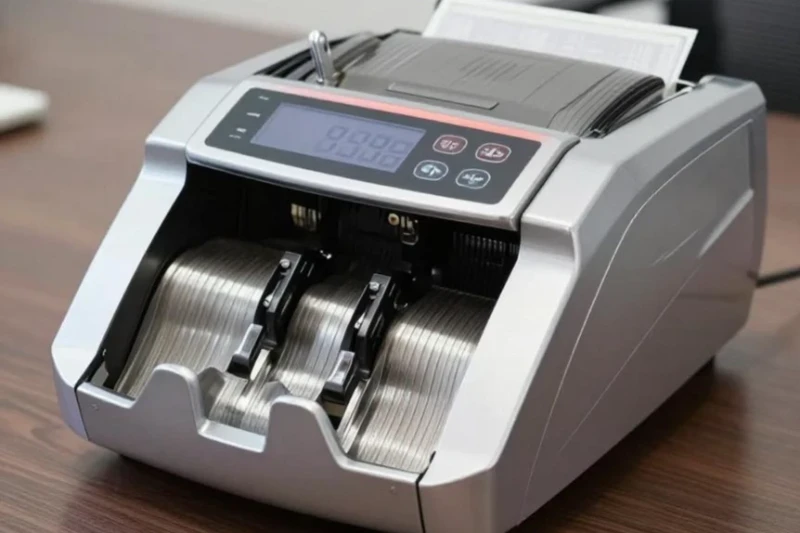
Currency detector mold
1.0
Our company specializes in customizing **counterfeit detector shell molds and injection molds for the internal structural components of counterfeit detectors**, suitable for the production of plastic parts for desktop counterfeit detectors, portable currency counting and detecting machines, and RMB/foreign currency identification equipment. The molds are processed using high-quality mold steel, featuring high precision and strong wear resistance, enabling the integrated molding of various plastic parts such as shells, panels, brackets, and shields. They support multi-cavity molds and rapid mold change, resulting in products with smooth surfaces, uniform assembly clearances, and low shrinkage and deformation, meeting the requirements for mass production of counterfeit detection equipment.
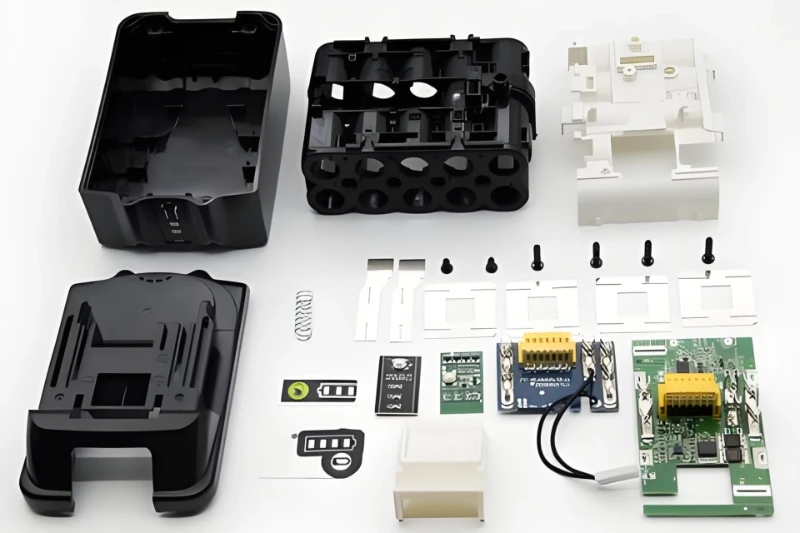
Electronic precision plastic parts
1.0
It is widely used in fields such as consumer electronics, smart devices, communication equipment, semiconductors, and precision instruments. With its stable quality, high adaptability, and cost-effective performance, it meets the precision assembly needs of high-end electronic products